Why Do We Say Namaste?
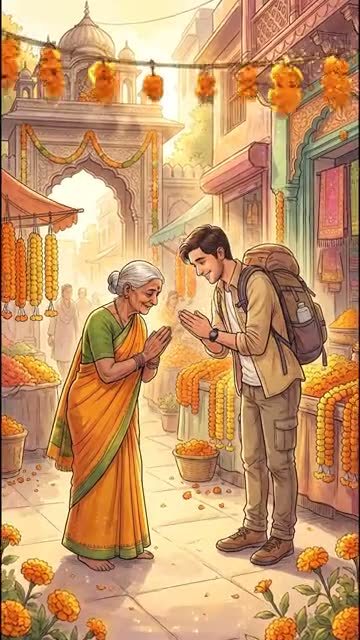
Two palms pressed together, a small bow, one word. India says it to everyone, from a grandmother to a stranger. But what does namaste really mean?
The words
In Sanskrit, namah means I bow, and te means to you. Namaste: I bow to you. Some even read namah as na ma, not me: no ego before you.
The gesture
Palms together at the heart, head gently bowed. It's a greeting of humility and friendship, and it works for everyone: older or younger, friend or stranger.
The divine
Tradition says the same divine spark lives in every one of us. So when you say namaste, you bow to the divine in the person in front of you, whatever their caste, colour or creed.
So namaste isn't just hello. It's ego set aside, friendship offered, and the divine recognised in everyone.
Try it this week
Who taught you to say namaste?
Keep watching
All rituals
One ritual a week
The new film, its meaning in plain words, and one small practice for your week. Nothing else.
You're on the list. The next film comes straight to your inbox.